Suwon Mayor Addresses Our Group

The chaplains and assistants in the brigade run a command-emphasized program for Soldiers just arriving to the brigade to learn how to use the public transportation system, order and eat at a Korean restaurant and visit a Korean cultural site. You can read more about these trips here.

Suwon Hwaseong Fortress
One of the battalion chaplains talking about the Suwon Hwaseong Fortress we were visiting.

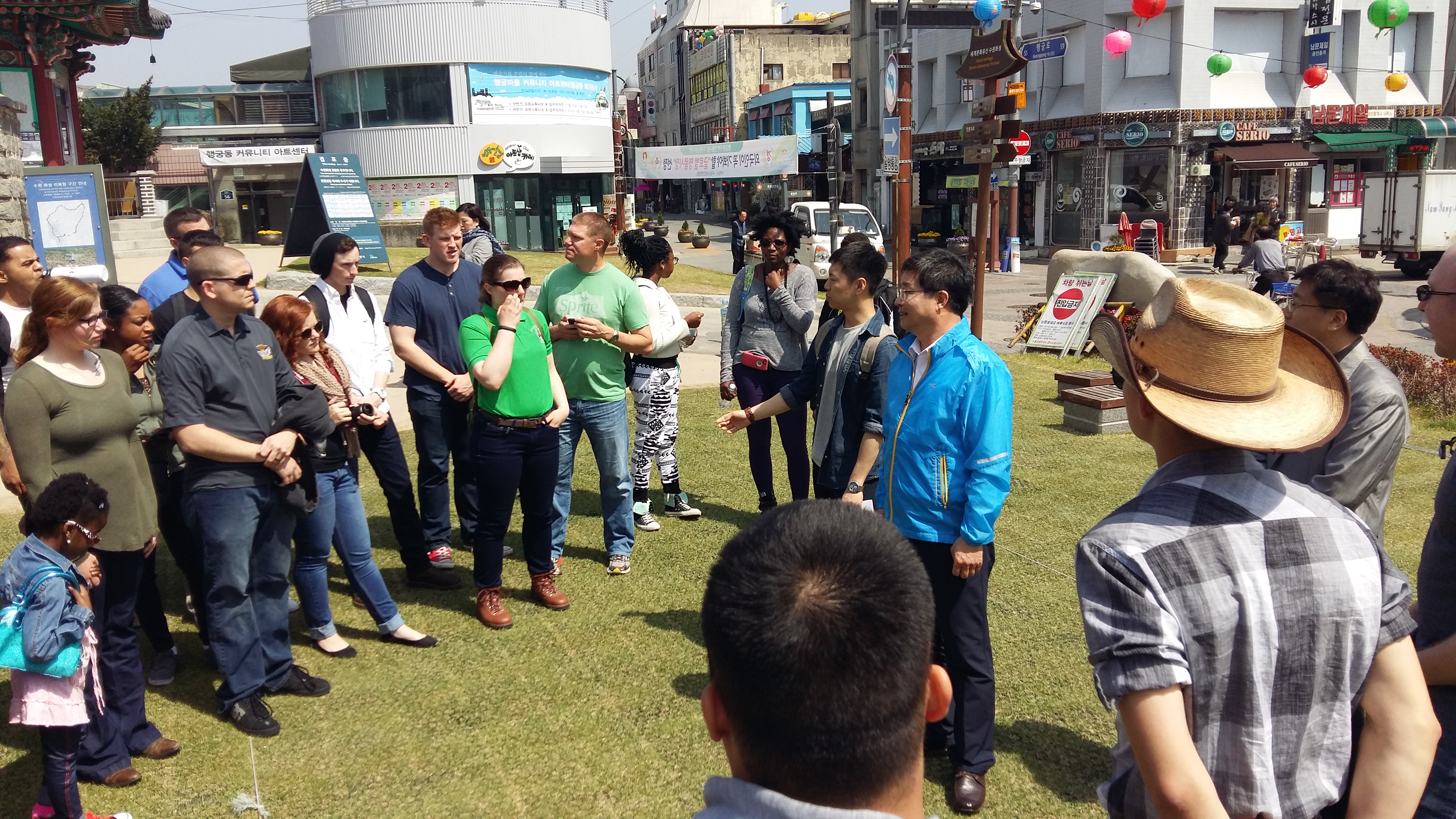
We usually run these trips twice a month with little fanfare or excitement, but this day, because Suwon was preparing for a big festival on the weekend, the mayor was in the area and asked to talk to us. This is pretty significant, realizing that Suwon is a city with a population of over 1 million.

Mayor Yeom Tae-Young talked about his appreciation for our presence and told us some of the history of Suwon and the fortress we were there to visit. He also asked to have a picture taken with us (which we also wanted with him), then encouraged us to have a great visit and to come back for the festival.

Suwon Mayor
The mayor of Suwon (in the blue jacket) speaks to our group.

.

Suwon Mayor
One of the BN chaplains greeting the Suwon mayor.

.

Suwon Mayor
Me with the Suwon mayor after he talked to our group.

.

.

.

Battalion Memorial Ceremony

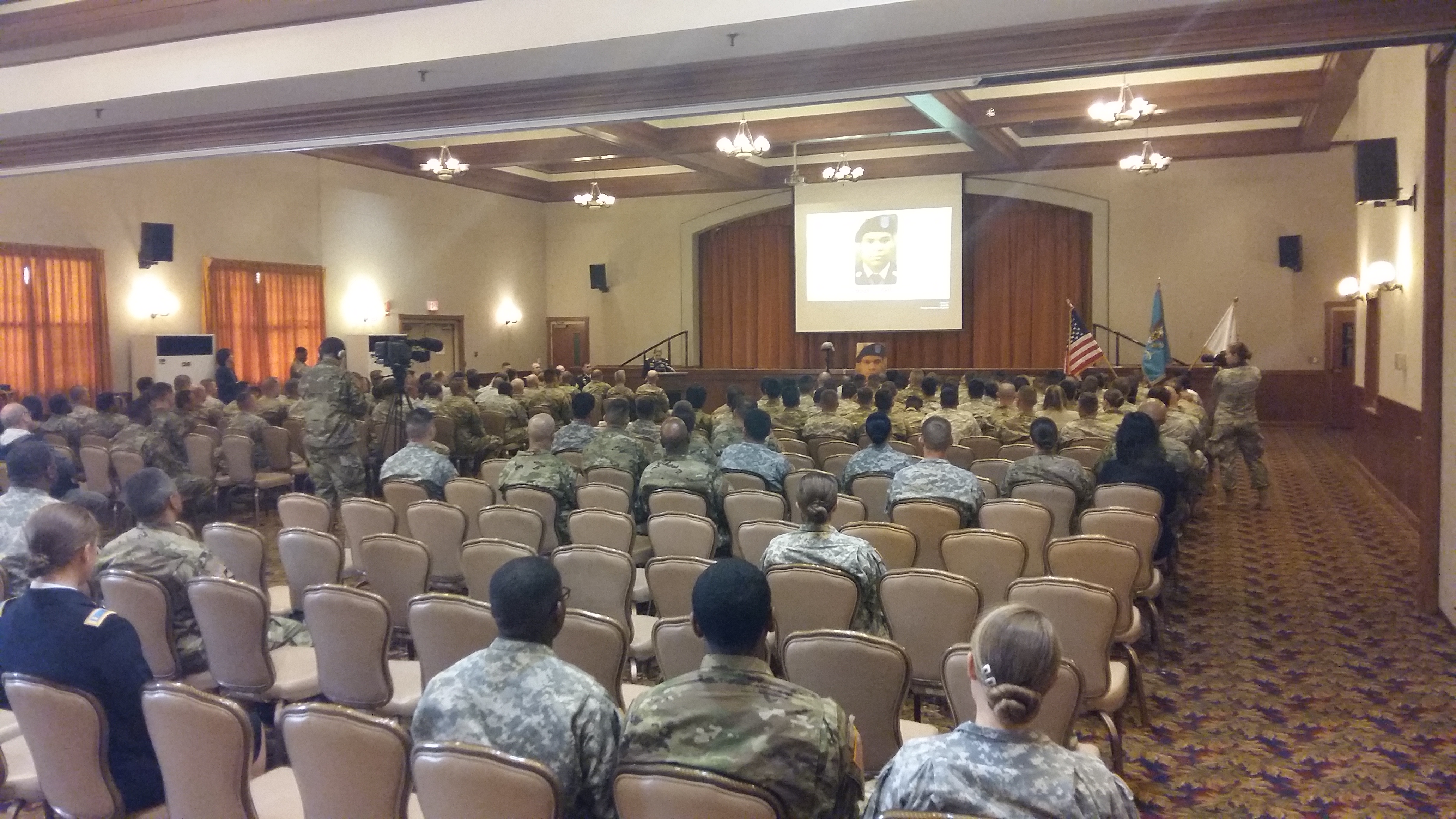
Outside of combat, it is not all that often when a Soldier in a unit dies. The exceptions are unfortunate, but demand that the unit properly and respectfully honor that Soldier. The options for the unit are essentially two: a Memorial Service or a Memorial Ceremony. The difference in the two are basically that a Memorial Service is religious in nature, while a Memorial Ceremony is patriotic in nature. A Memorial Service, being a religious service, cannot be required attendance for Soldiers, but since a Memorial Ceremony is basically patriotic (though with religious elements) the Soldiers of the unit can be required to attend, though in most circumstances the majority of the unit will want to be a part of the ceremony honoring their fallen comrade even when not required.

This week, a battalion in my brigade had the opportunity to honor a Soldier who was involved in an automobile accident. This Soldier was proficient and well-liked, so his loss was deeply felt by the unit, especially those in the deceased Soldier’s section. The Memorial Ceremony was an opportunity not only to honor the Soldier who died but also to give an opportunity for the unit to grieve together and begin to heal from their loss.

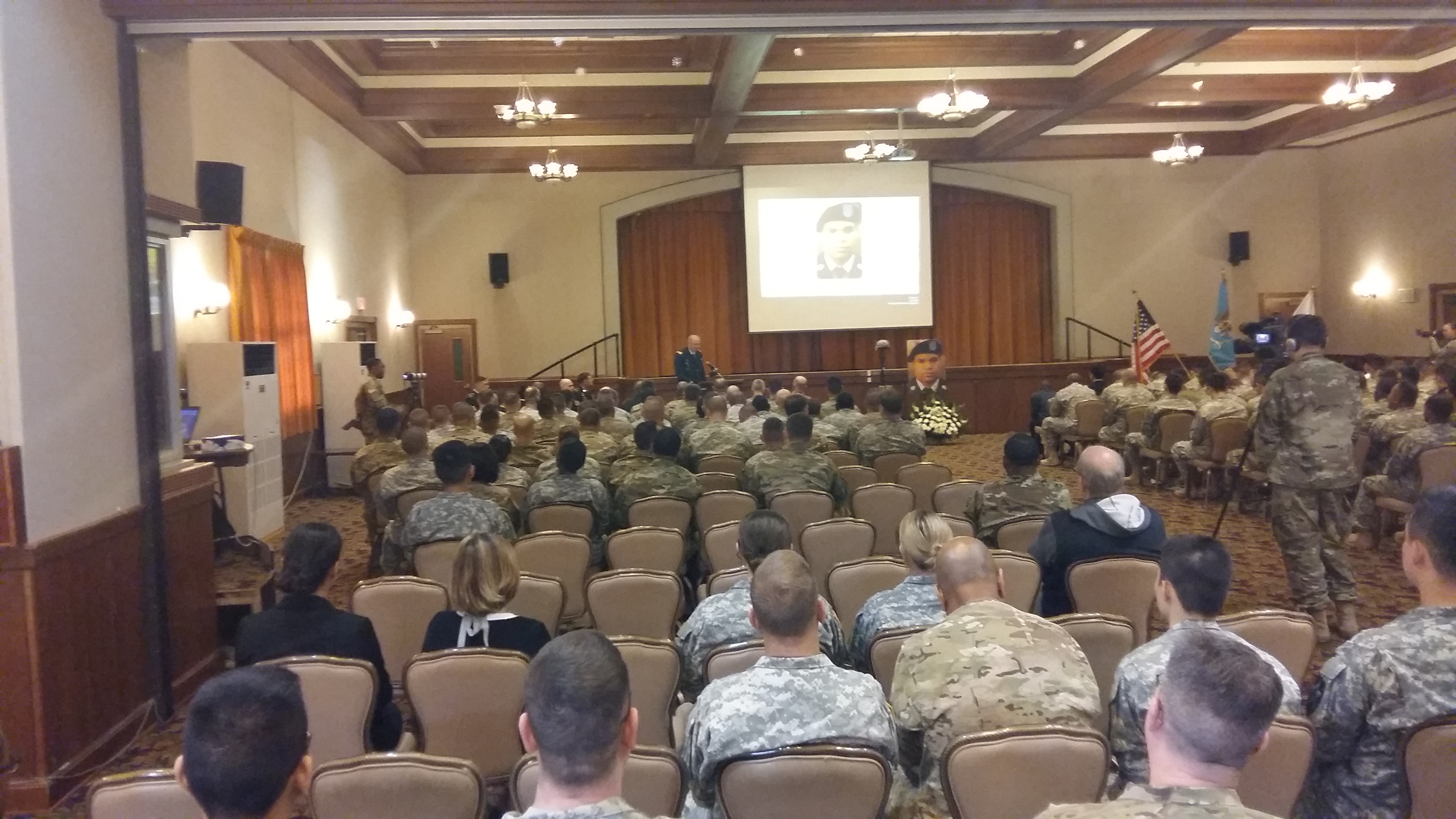
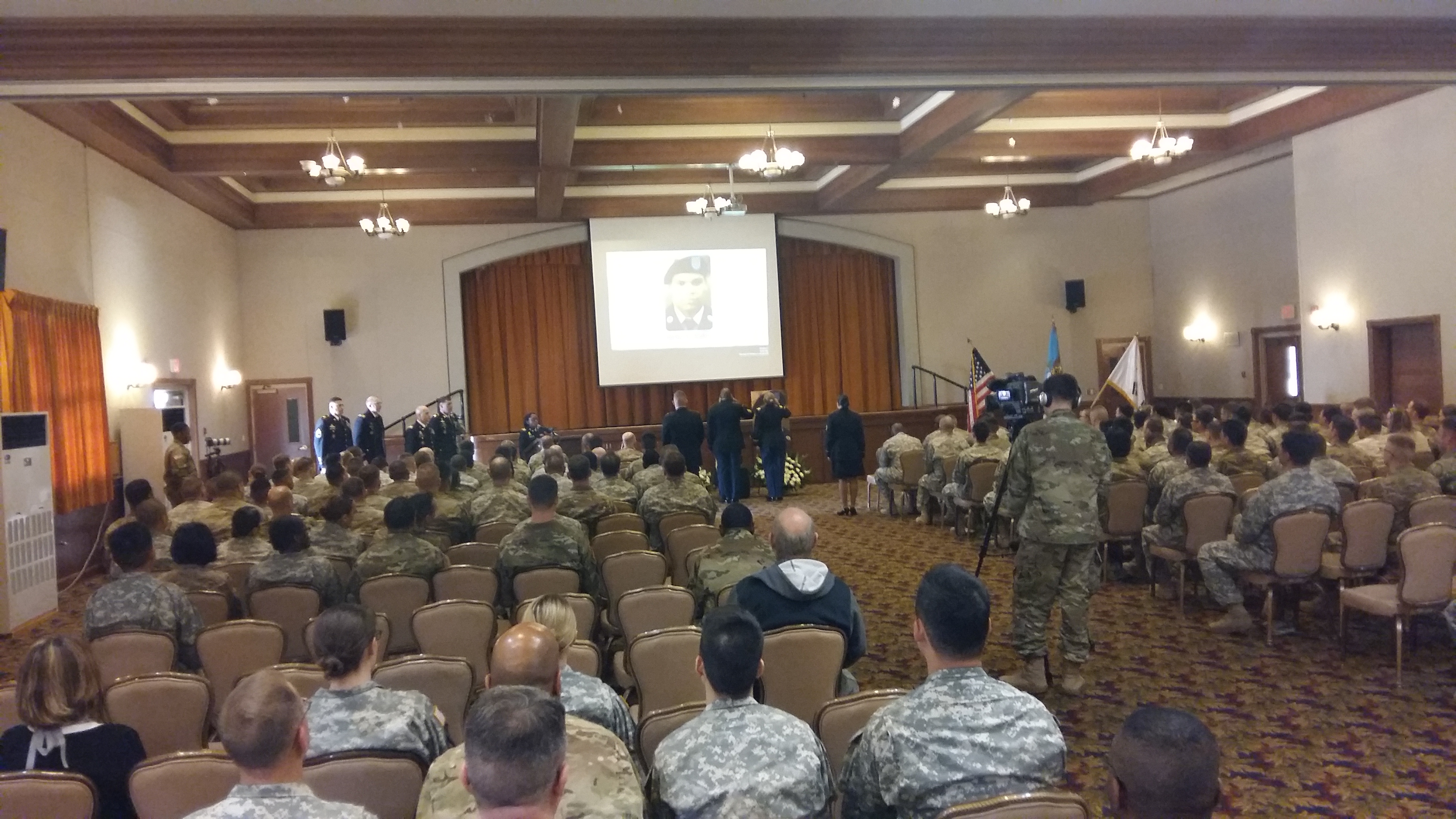
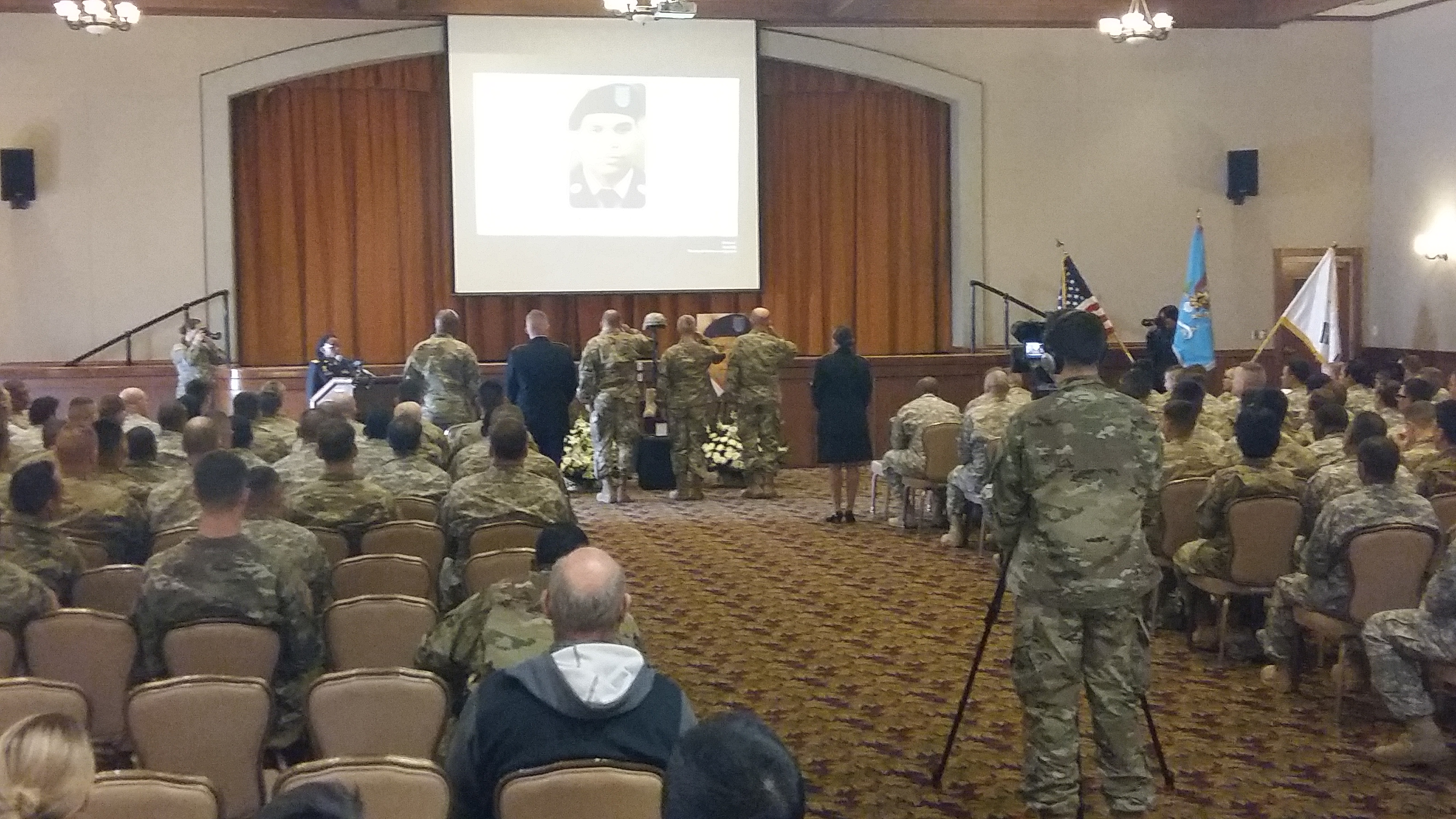
Here are some pictures from the Memorial Ceremony:

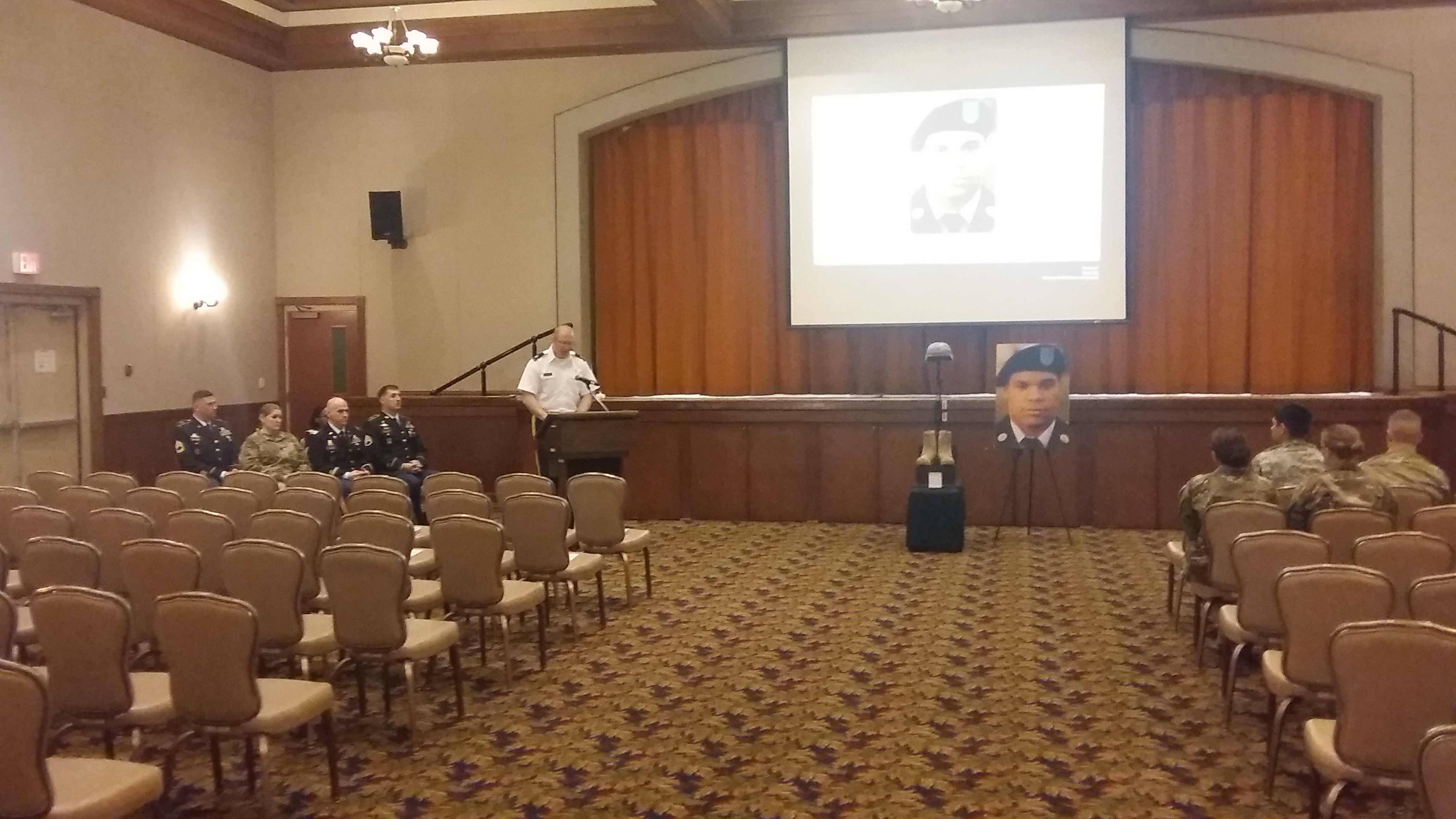
Prior to the ceremony, the participants rehearse the service to ensure a near-flawless ceremony. At the podium is the battalion chaplain (photo by Daryl Densford).
Prior to the ceremony, the participants have several rehearsals to ensure a near-flawless ceremony. At the podium is the battalion chaplain.
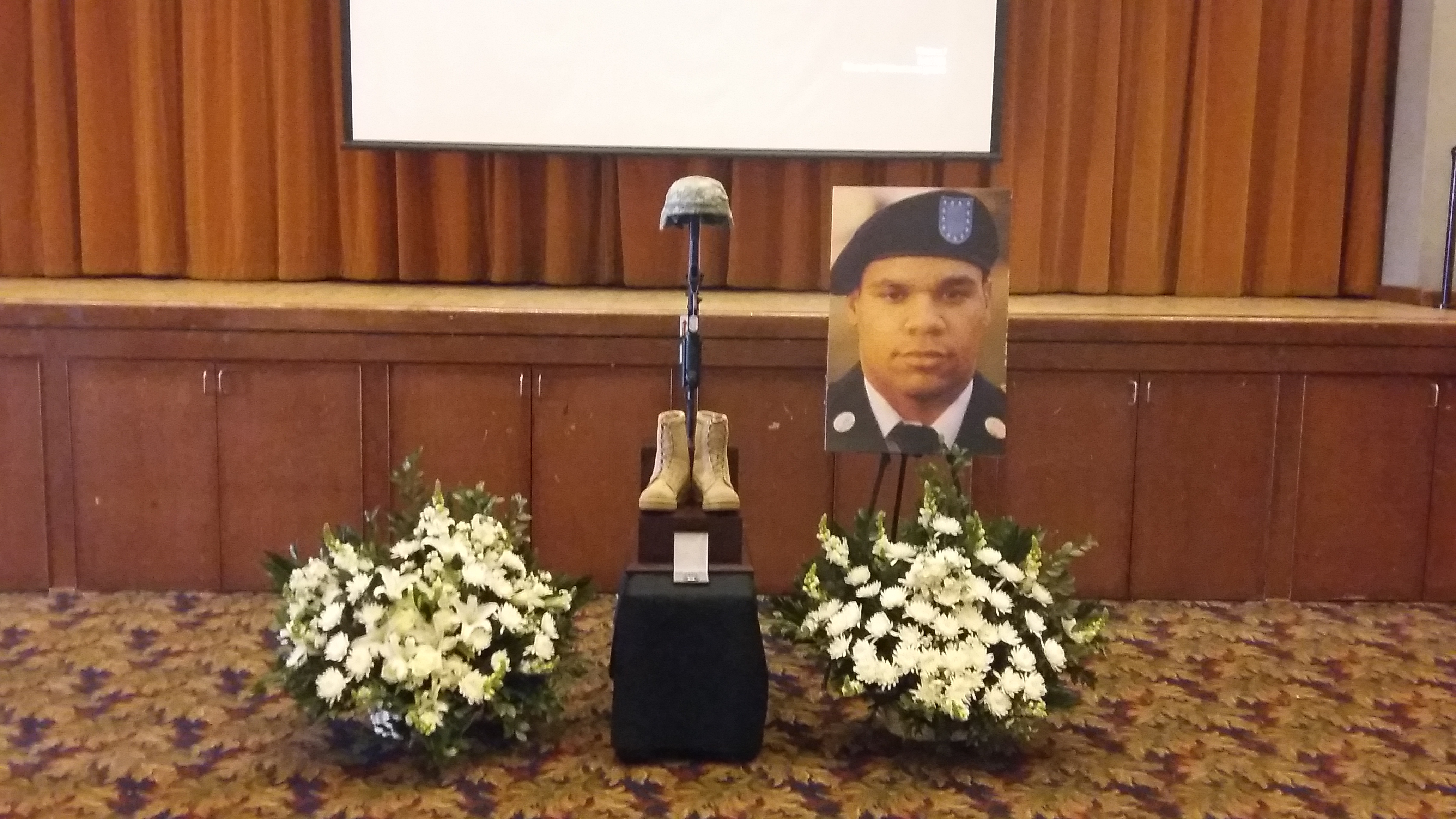
The Memorial Stand is set with a rifle, helmet, boots and dog tags. The Soldiers' final award and photo are also on display (photo by Daryl Densford)
The Memorial Stand is set with a rifle, helmet, boots and dog tags. The Soldiers’ final award and photo are also on display.
A small display was set up at the rear of the auditorium.
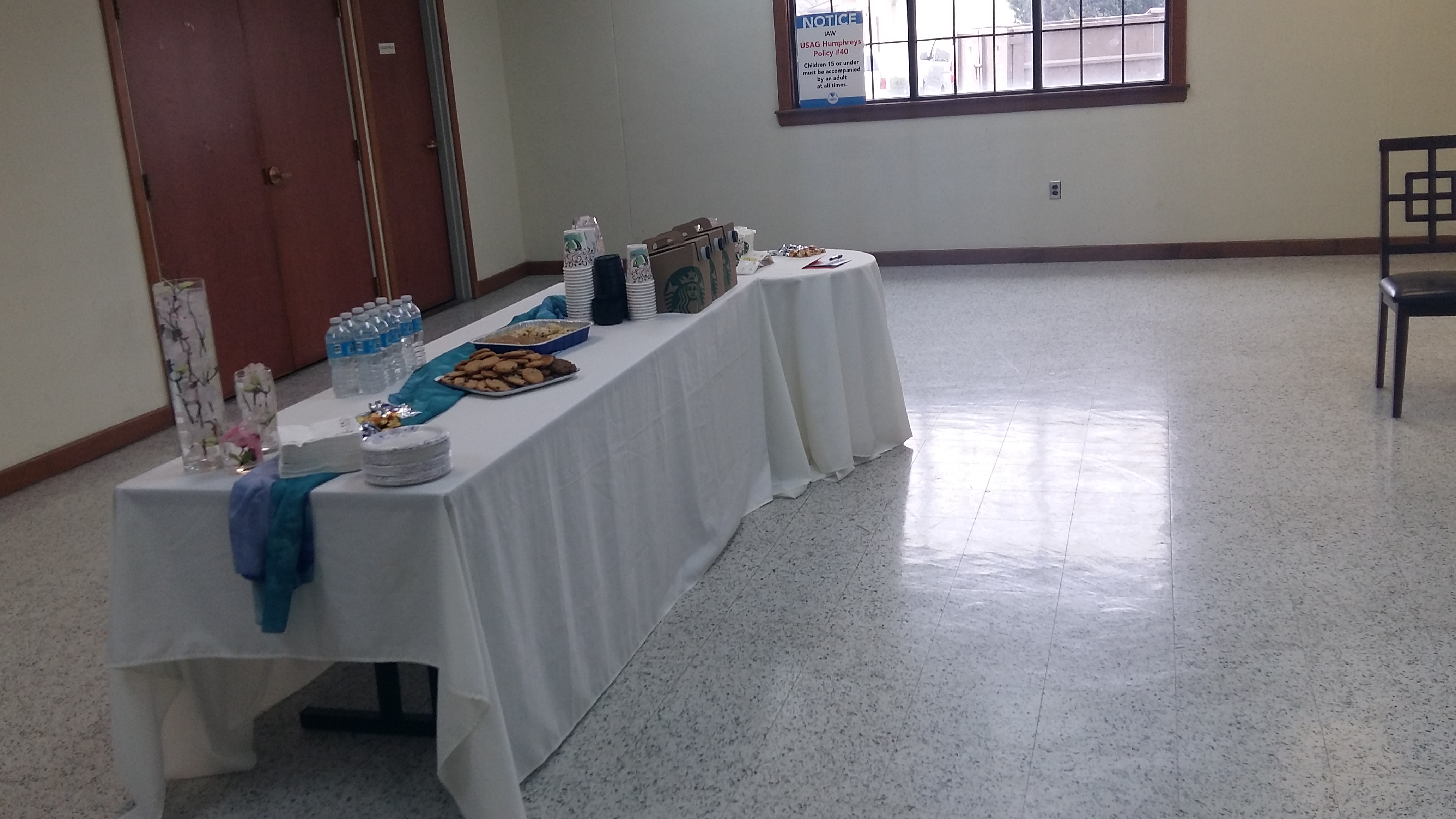
The FRG set up a hospitality room for the father and close friends.
The FRG provided a hospitality room for the father and close friends.
There was a good turnout from the unit as well as from sister units. There was also great support by chaplains and chaplain assistants from this post and others. At the podium is the battalion commander.
There was a good turnout from the unit as well as from sister units. There was also great support by chaplains and chaplain assistants from this post and others. At the podium in this picture is the battalion commander, the first of several of the Soldier’s leaders and friends who eulogized the deceased Soldier.
The battalion chaplain shares a message of hope.

Following the “Last Roll Call,” the Honor Guard firing squad provides a 21-gun salute.

Upon completion of the 21-gun salute, the bugler plays Taps, out of sight of those in the ceremony, but where he can be heard by them. This isn’t the best of videos, but it shows the honor rendered to the fallen Soldier. This bugler did an excellent job.

At the end of the ceremony, participants and attendees have the opportunity to offer respects and render honors for the fallen Soldier at the Memorial Stand.
Respects are paid in different ways. Most salute, some give coins, others offer a prayer.
The rank of the deceased and those who honor him/her are irrelevant. Here a Command Sergeant Major, Colonel and Major General render honors to the fallen Private First Class.
By the time everyone had rendered honors, there was quite a collection of coins, patches and notes that will be send to the Soldiers next-of-kin.
By the time everyone had rendered honors, there was quite a collection of coins, patches and notes that will be sent to the Soldiers next-of-kin.

.

While Memorial Ceremonies are not usually attended by family members, sometimes they are. This ceremony had the Soldier’s father in attendance. A video of the ceremony will also be sent to the other family members as a remembrance of the Soldiers honorable service and to show how the unit honored that service and the memory of the Soldier.

Memorial Ceremonies and Services are not only an effort to honor the fallen Soldier but also to provide an opportunity for the unit -often the Soldier’s closest friends- to remember, memorialize and honor their friend and comrade. Additionally, they give an opportunity for those Soldiers to grieve their loss and begin to heal and recover. This ceremony, with the remembrances shared by the unit leadership and friends and the message by the chaplain, went a long way toward bringing this healing to the unit’s Soldiers.

.

KATUSA Promotion Recognition

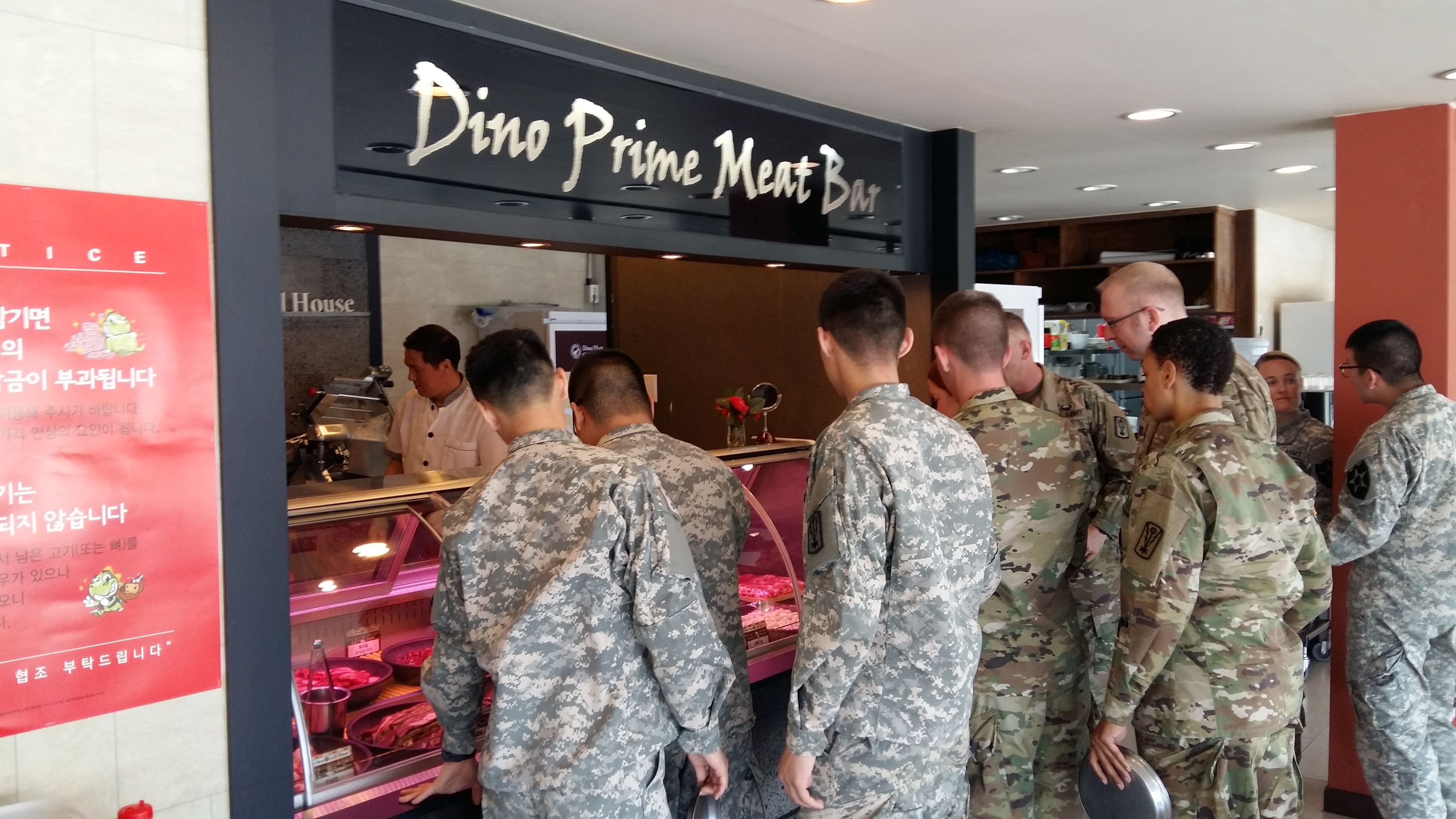
The U.S. forces in Korea have a large number of KATUSA (Korean Augmentation to U.S. Army) Soldiers working with us. The chaplain’s offices often have a KATUSA assigned to them. In my brigade, we have a KATUSA as part of the BDE UMT and one of our battalions also has a KATUSA. These KATUSAs are doing a 2-year tour of duty with about 18 months of it on assignment with us. They receive their rank based on time-in-service. My KATUSA was recently promoted to corporal and the battalion KATUSA was just promoted to sergeant. To help him celebrate his promotion, we went to Dino Prime Meat Bar in Pyeongtaek, a great meat buffet. Here’s some pictures:

.

Dino Prime Meat Bar
Dino Prime Meat Bar in Pyeongtaek.

.

Dino Prime Meat Bar
A large assortment of meats are in a refrigerated case where you select what you want then take to your table to cook.

.

Dino Prime Meat BAr
A variety of raw cuts of beef and pork, some marinated (no dinosaur, though). All of it looks good (at least if you’re a carnivore)!

.

Dino Prime Meat Bar
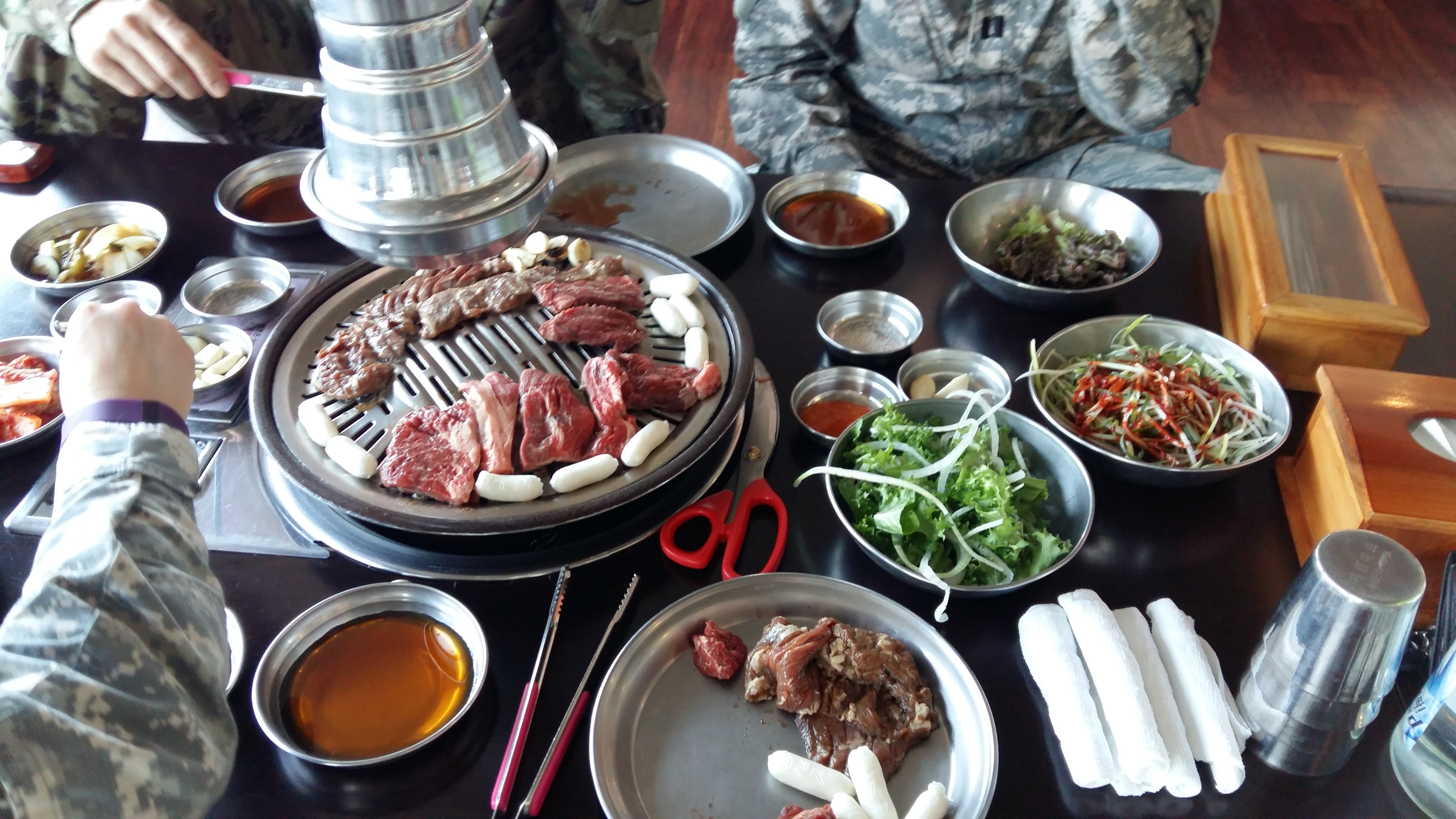
Each table has it’s own grill (and exhaust flue) and you’re brought a variety of “sides” to eat with your meat.

.

Dino Prime Meat Bar
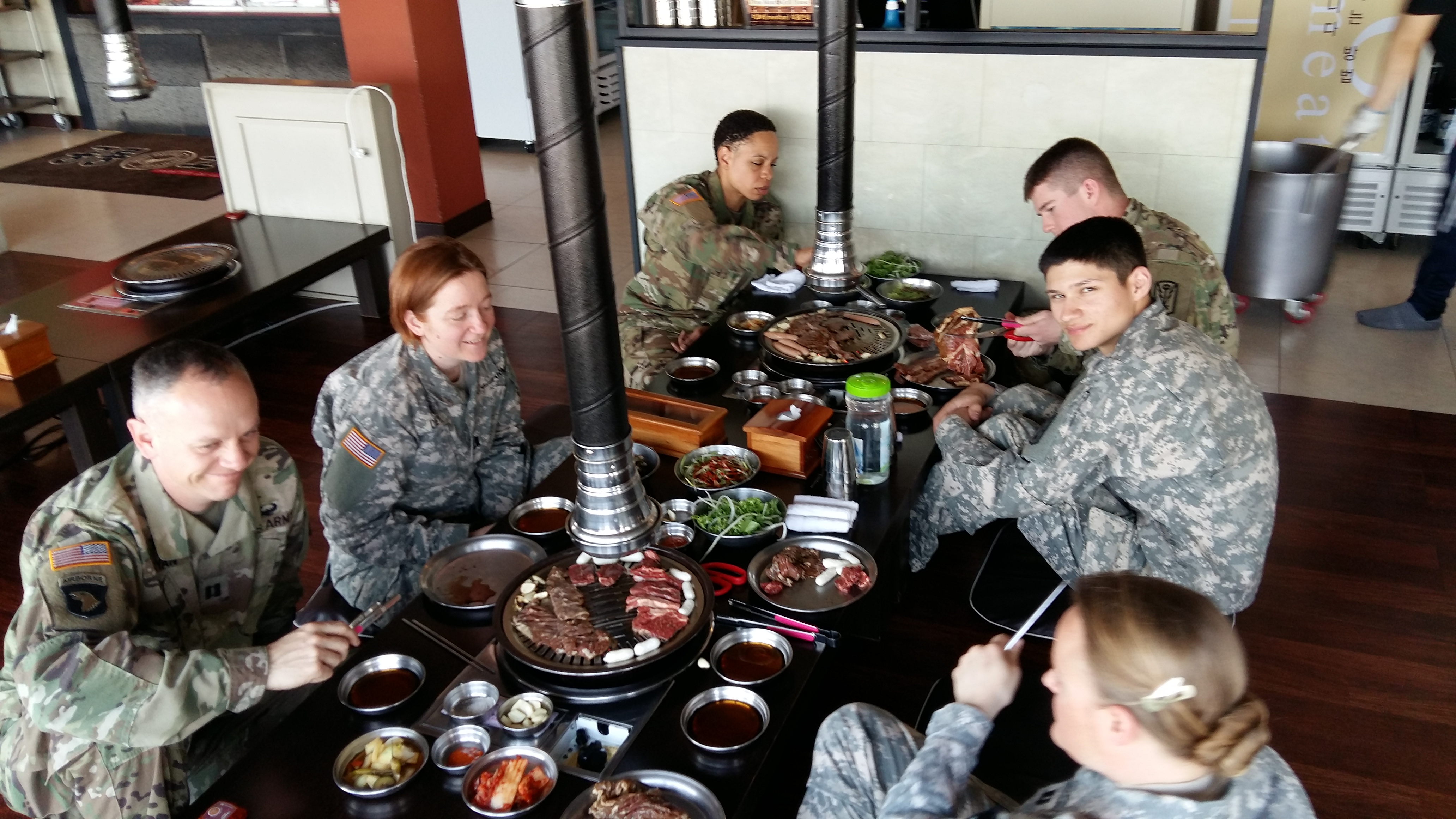
This particular Dino only has seating on the floor…not very comfortable for old guys like me! This is some of my chaplains and assistants.

.

Dino Prime Meat Bar
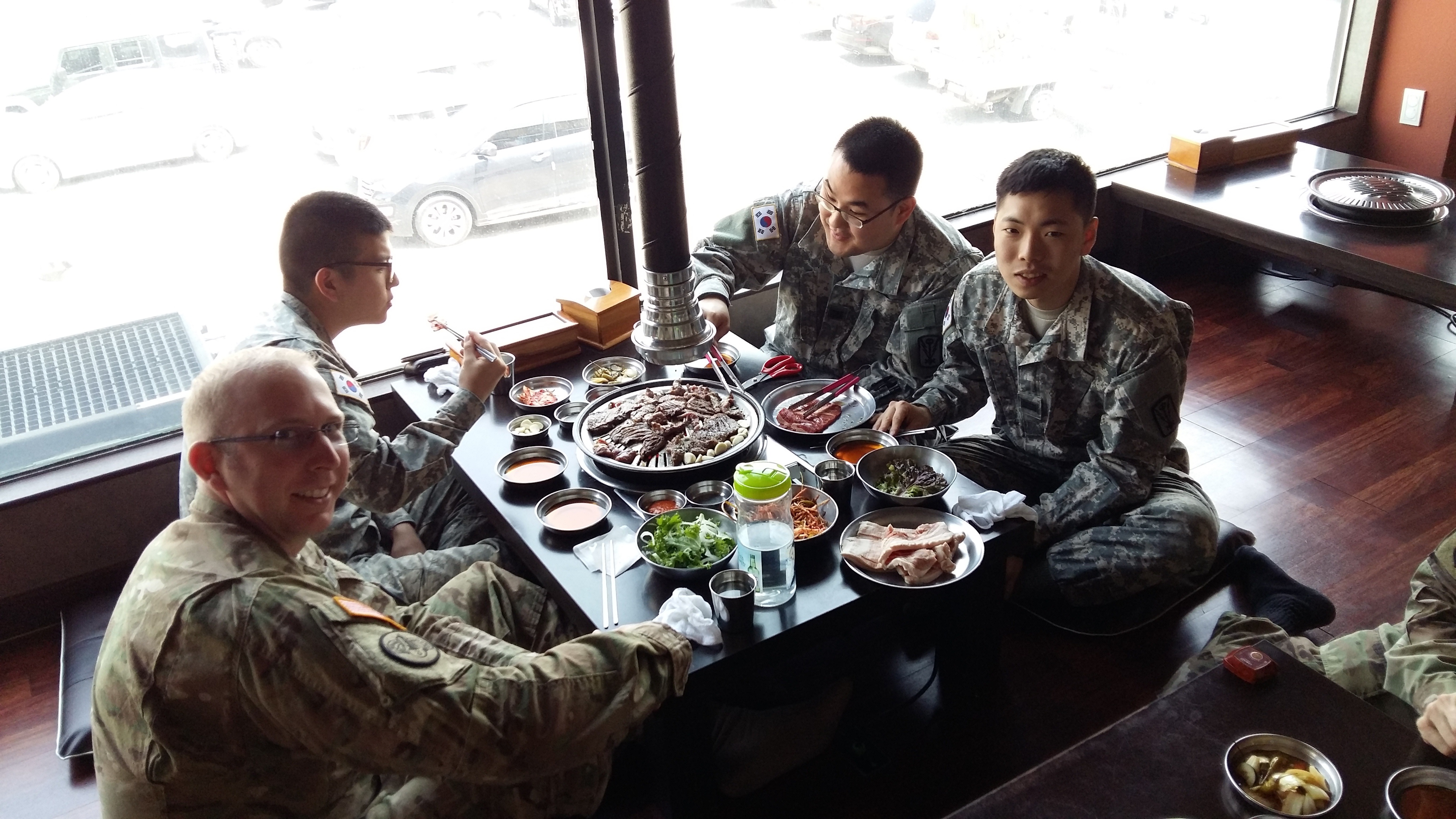
Here’s another of my chaplains and 3 KATUSAs (also on the floor!).

.

KATUSA Promotion
I gave the newly-promoted KATUSA a choice of a cross to wear around his neck or a cross on a key chain (both made and donated by my nephew).

.

KATUSA Promotion
He chose the one with the leather string to wear so I “officially” presented it to him as congratulations for his promotion.

.

Pyeongtaek street
Here’s a very Korean-looking street of Pyeongtaek on the way to Dino Prime Meat Bar

.

.

Christmas Alone

Of the nearly 30 years that I’ve been married, I’ve been away from home at Christmas 3 times. Some would argue that a 90% at-home rate is pretty good, especially for a military family, but when you’re in the midst of that 10% absence, the 90% doesn’t bring a whole lot of Christmas cheer.

According to the Department of Defense, about 220,000 Service Members are serving overseas this Christmas season, so I’m certainly not alone and by comparison to the men and women in places like Iraq and Afghanistan, I don’t have it too bad, but all the same, it would be nice to be home with family.

Christmas-rolls
Not as good as my wife makes from scratch, but not too bad!

With that said, being alone over the holidays does give one the opportunity to reflect on what is really important and on the blessings that are enjoyed, even when separated from friends and family. So, on this Christmas morning, with Christmas carols playing on the stereo and cinnamon rolls baking in the oven (see, I really don’t have it that bad!), I want to take a minute to share some of my blessings.

Unlike many men and women in uniform, I did get to go home and celebrate Thanksgiving with my family (all but one child was there!). This was a great blessing after 5 months away from home. Even having a “honey-do” list while there, just being home with my family encouraged and renewed me.

It’s also my family who continue to be a blessing. Just knowing that they’re there, “there” as in home, is a blessing. To have the love of a family who cares, blesses more than words can adequately express. To know that my home is where my family is -even if I’m not there- and that that home is full of those I love and who love me is a wonderful thought that helps to get me through these difficult times.

While my wife is part of the family I’ve already mentioned, she brings an even greater blessing to me. She has to take up much of the slack when I’m away. She has to be the mother and the father. She has to take care of the repairs and maintenance…and she also has to deal with me being away from home. The knowledge of her commitment not only to me, but to my calling is a blessing of saintly proportions. To know that she is not only behind me in what I do, but often beside me when I do it, enables me to drive on when the road seems too hard to travel.

Christmas-Eve-
Area II Protestant Community Christmas Eve Service at South Post Chapel, USAG Yongsan

When away from home, our reliance on other relationships for support becomes more important. For me, these relationships are best found in the Church, the family of God. Having the opportunity to worship with another part of the Body of Christ during one of the most important holy days of the year is a blessing that lives on and continues wherever the military takes me.

With recent messages received, I’m reminded of the blessing of my church family at home, as well. A pastor and wife who remember me in prayer and the rest of the church family who look after my family while I am away is a blessing for me now and will be a blessing for them later.

There are also those unexpected blessings that come. Since I’ve been in Korea, I’ve had the opportunity to meet and fellowship with people I would have never otherwise had the opportunity to know, like a pastor and his family of my denomination who is ministering here in Seoul. And like the missionary from South Africa, also from my denomination,  who was here visiting a family member and I was able to have lunch with. To be able to have coffee or lunch and great conversation in person with Christian friends (and thinkers) is an immense blessing.

Bottom line, wherever I go, I know that God is there. Whatever I face, I know that God goes with me. Whatever discouragement I may feel, I know that God comforts me. So really, I’m not alone at all. The Jesus who I celebrate today is with me. The God who chose to become man and walk on this earth with humankind, continues to be present with me today. This is a true blessing. The salvation that He brings me, makes this Christmas -and every Christmas- more than just a holiday to celebrate with family and friends, but a relationship to experience which never leaves me alone and never leaves me wanting. Alone this Christmas? Not by a long shot!

.

.

70th Anniversary of V-J Day

V-J SigningVictory over Japan day has never been a big celebration for me during my life time, but it takes on new significance being in Korea. I have only seriously talked to a very few people here about their feeling towards Japan, but most still hold an animosity toward them lingering from the Japanese occupation during most of the first half of the 20th century-even some who weren’t even living at the time. It was our victory over Japan that won South Korea’s freedom from a very brutal and oppressive occupation that lasted most recently for over 35 years.

These feelings were prolonged by the lack of U.S. sensitivity to the Korean’s attitudes toward the Japanese occupation as the U.S. military leaders enlisted the help of some of the Japanese officials who had been in control in Korea, as well as Korean’s who were viewed as Japanese “puppets” or sympathizers, during U.S. assistance in Korea following the end of the war. It took several years following the defeat of Japan to really cleanse the Korean government of the last vestiges of the occupation.

Japanese-build building on YongsaRemnants of the Japanese occupation remain here on USAG Yongsan where I am stationed. Many of the older buildings were built by the Japanese to house their military and government infrastructure. While the insides have been sufficiently remodeled and updated, the exteriors remain pretty much as they were during the first half of the 20th century though most symbols and references to Japan, if ever prominent, have long since been removed from view. (A pretty good article about the remaining structures can be found here.)

So for most Americans 14 August will come and go without much thought to our Victory over Japan 70 years ago, but for many Koreans it represents liberation and freedom from decades of oppression.

What if North Korea Attacks?

As the Brigade Chaplain, I’m involved in much of the staff work and planning for the Brigade Commander. Recently, the staff has been working on plans for the brigade in the event of war on the Peninsula. Often, when this planning is done in units in the States, it is theoretical or long-term but here in South Korea, it’s real life and comes with a sense of urgency and reality.
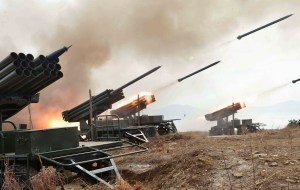
North Korean Artillery FireIt is not a secret that North Korea has one of the largest artillery inventories in the world, much of it pointed at South Korea. The capital of South Korea, Seoul, is just 35 miles from the Demilitarized Zone (DMZ) so is most vulnerable “with estimates of as many as 13,000 [North Korean] artillery pieces positioned along that border.”According to a South Korean security analyst quoted by GlobalSecurity.org, the North Koreans “could fire 10,000 rounds per minute to Seoul and its environs.” Which, based on some estimates, this “conventional artillery capability would allow North Korea to flatten Seoul in the first half-hour of any confrontation.”2

Much of the damage that would result from a first strike by North Korea would include significant loss of life and infrastructure to nearby U.S. And South Korean military bases. This doesn’t even take into consideration the North Korean use of uncoventional weapons. North Korea “… is armed with weapons of mass destruction — probably including nuclear weapons — and which, even more frighteningly, has developed a specific strategy for using them” against South Korea.3

According to Bruce W. Bennett, Senior Defense Analyst and professor at Pardee Rand Graduate School, North Korean strategy of attack looks something like this:

— Against South Korean and American battlefield forces, North Korea has emphasized artillery with chemical weapons, and built a huge arsenal of each.

— Against the nearby South Korean capital Seoul and ground force reserves behind the battlefield, North Korea has emphasized long-range artillery with chemical weapons, and special forces with biological weapons.

— Against rear area and off-peninsula targets, North Korea has emphasized ballistic missiles with chemical weapons and special forces with biological weapons, and the development of nuclear weapons.3

Grant it, it would not be long after an initial attack by North Korea that a formidable response was launched from U.S., South Korean and other militaries, but depending on the extent of that response, North Korea could still survive to launch another series of attacks.

The North Korean military has long understood that fortified bunkers are the key to survival in the face of superior enemy air power. There are thousands of hardened underground bunkers close to the front line, and North Korean artillery will carry out “shoot and scoot” attacks, emerging briefly to fire and withdrawing rapidly.4

According to a Rand Corporation Study referenced by PopularMechanics.com, it only takes about 75 seconds after firing, for North Korean artillery to be back under cover and protected from destruction. Ultimately, they would be found and destroyed, but a significant amount of damage and loss of life could be done in the mean time.

Technology can [possibly] help prevent the North Koreans from getting in a second shot. But there is not yet any solution to the thousands of shells and rockets they could launch with the first salvo on Seoul, and that remains one of the biggest concerns in an escalating conflict.4

United States Forces in Korea have plans in place for rapid evacuation of family members and non-essential United States citizens from the peninsula in the event of conflict, as well as issuing protective equipment for family members to protect against chemical and biological attacks. These plans provide some comfort to those living here, but in reality, if North Korea launches an attack from their close proximity, it’s not likely that any of those protective measures would be effective.

Kim Jong-unOne would hope that Kim Jong-un would have sense enough to not begin a military conflict that would very likely end with his -and his military’s- annihilation but based on his (and his predecessor’s) statements and reckless activities, that hope isn’t very secure. Since the signing of the armistice, there have been no fewer than 50 border “incidents” involving North Korea.However, even as seemingly crazy as Kim is, maybe self-preservation will breed restraint in North Korea, allowing the power Kim exerts over his own people to satisfy his craving and prevent him from striking out against his neighbors, who, by the way, long for reunification and lasting peace.

.

.

.

1 http://www.popularmechanics.com/military/a6212/north-korea-and-flattening-seoul/

2 http://content.time.com/time/world/article/0,8599,446776,00.html

3 http://www.rand.org/blog/2003/03/n_-koreas-threat-to-s_-korea.html

4 http://www.popularmechanics.com/military/weapons/a6211/north-korea-conflict-weapons-available/

5 https://en.wikipedia.org/wiki/List_of_border_incidents_involving_North_Korea

.

Photos

Artillery fire: A view of artillery fire and landing exercises guided by North Korean leader Kim Jong Un (not seen) in this undated photo released by North Korea’s Korean Central News Agency (KCNA) in Pyongyang February 21, 2015. (From http://www.japantimes.co.jp/news/2015/02/25/asia-pacific/north-korea-100-nuclear-weapons-2020-u-s-researchers/)

Kim Jong-un with Generals: This photo is from a past DG article from the last time the North Koreans threatened an attack against the U.S., here sits the mighty Kim Jong Un surrounded by his generals making ingenious plans to destroy the U.S. — this was obviously a staged photo. Then if you zoom in above the general’s head (as NKNews.org points out) you can see a map of the US with lines coming into it (implying lines of attack). The text apparently reads “US Mainland Strike Plan” (which is not subtle). (From http://www.darkgovernment.com/news/north-korea-threatens-nuclear-missile-attack-on-u-s-again/)

.

.

Office Space

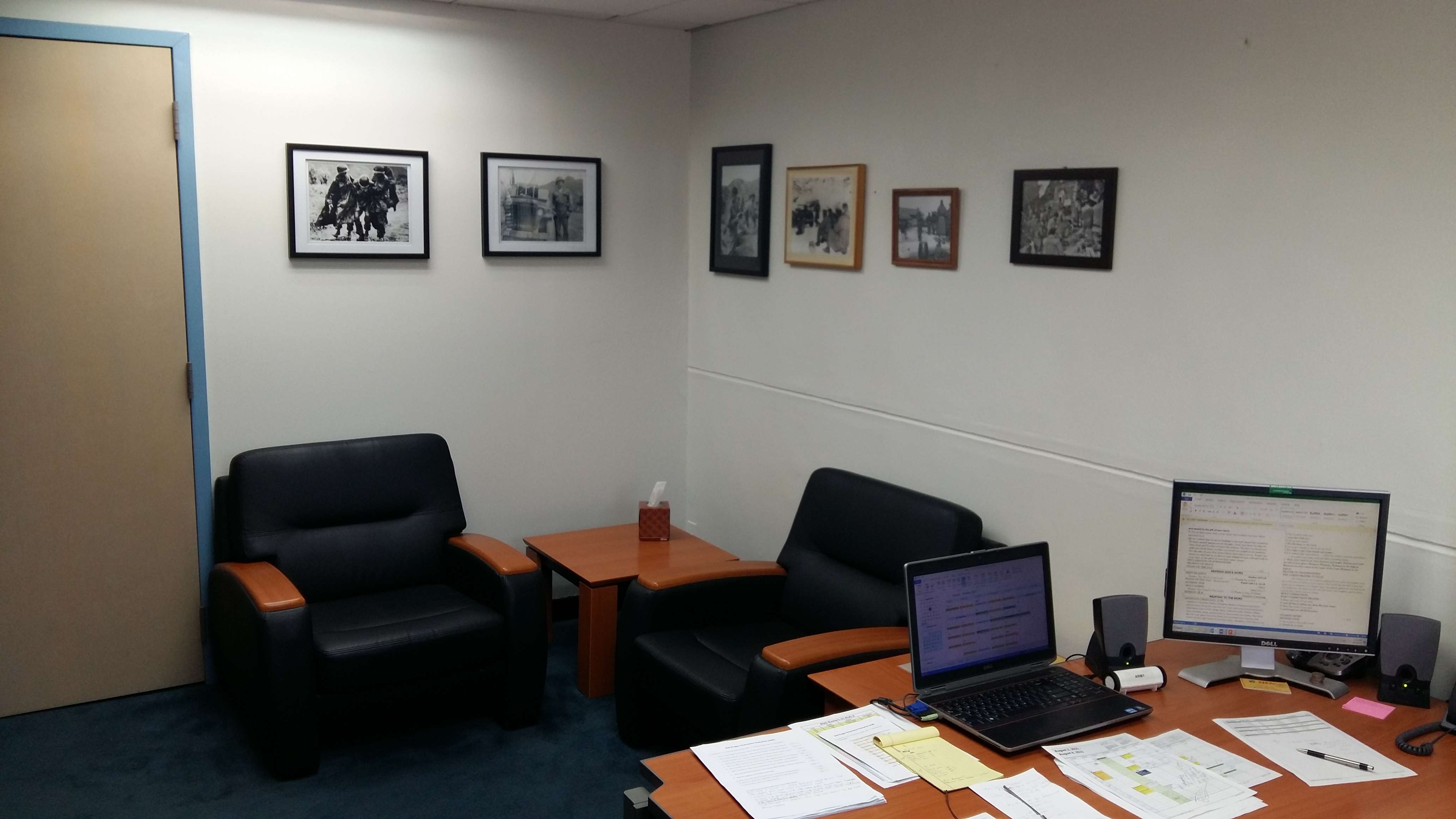
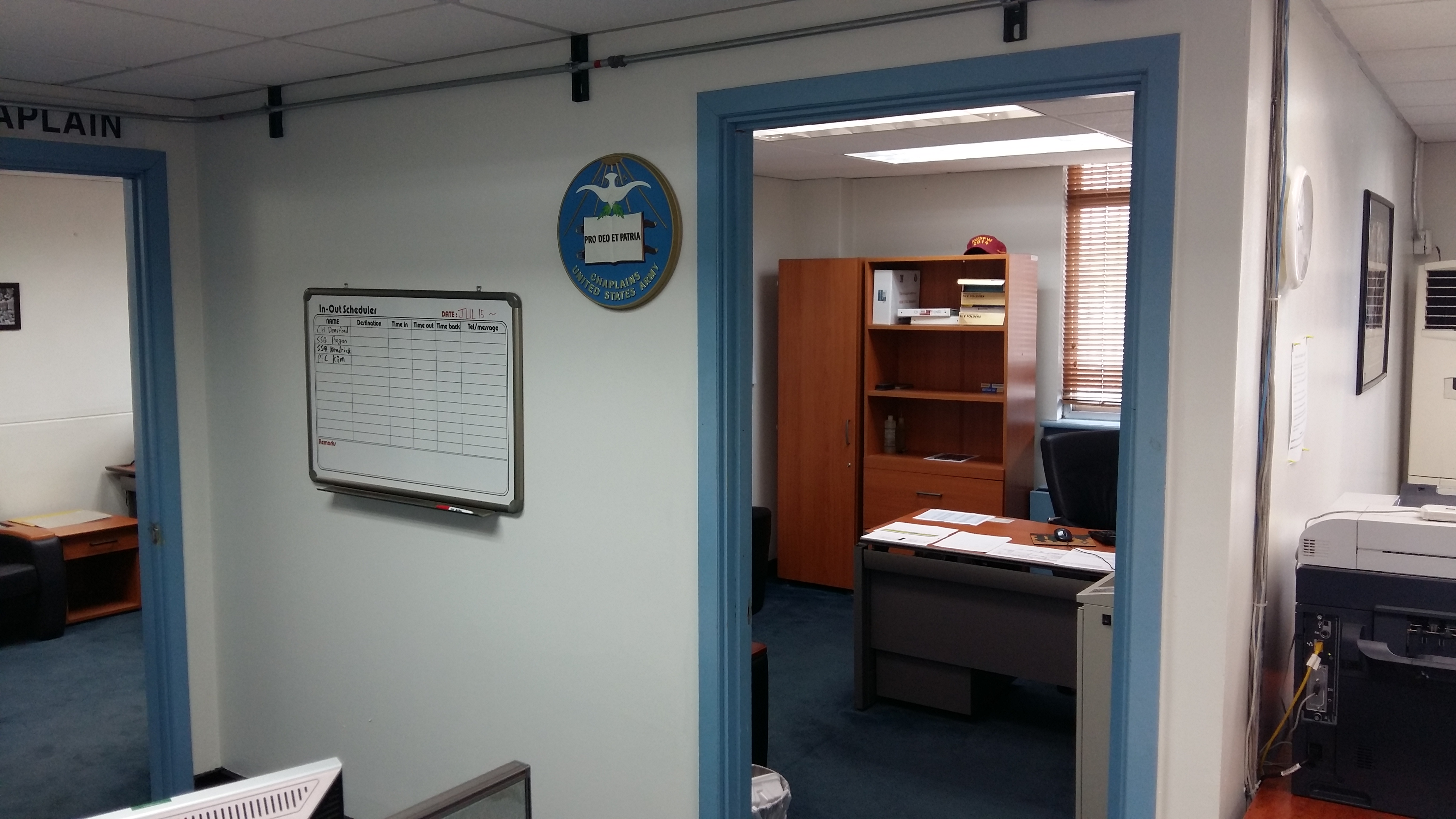
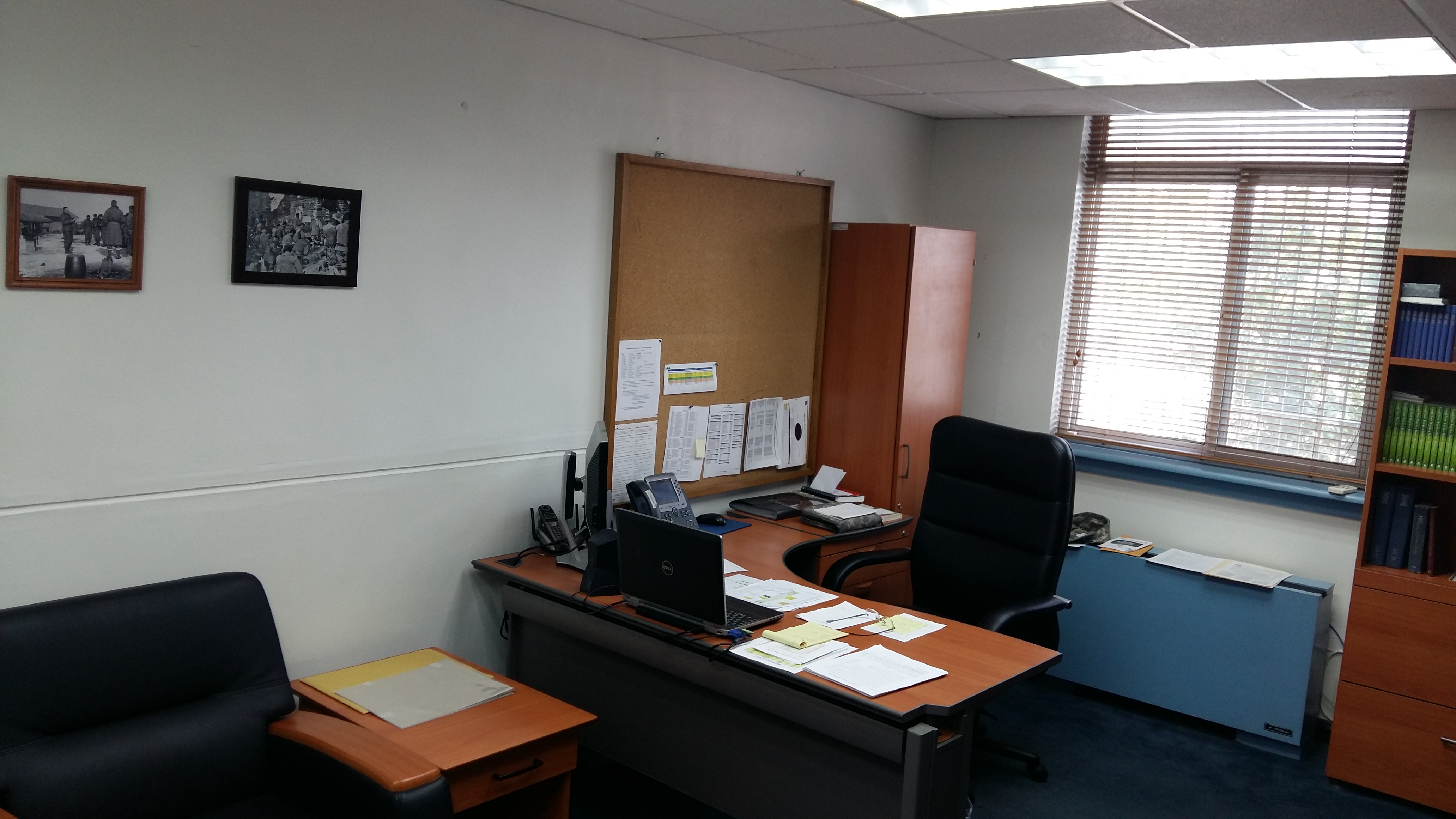
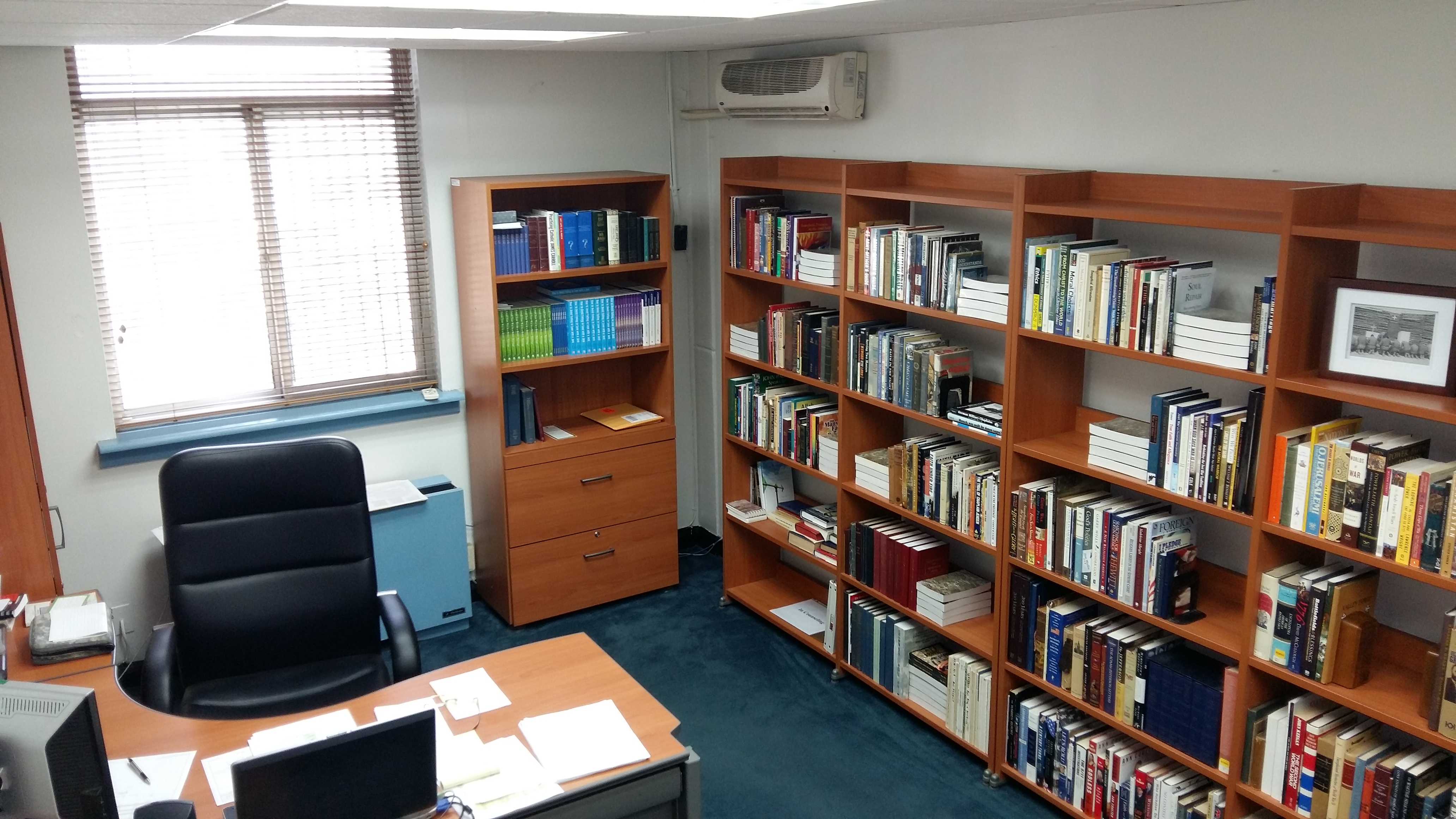
I’ve finally about got my office set up for my stay in Korea. I’ve unpacked my books, arranged my furniture and desk and hung some pictures. It’s a good space. The Unit Ministry Team (Chaplain & Chaplain Assistant, and in Korea a KATUSA) actually has a suite because of the work that we do. There’s a comfortable place for a few people to sit, along with books and Bibles they can take with them. The chaplain assistant has an office while the KATUSA has a desk by the door, kind of like a “receptionist.” Then I have my office for work, study and counselling.  We try to make it an inviting place.

My office has a window which opens to a school. Most every day I hear the children out playing on the playground…sure, I won’t miss my kids! But it is actually nice to hear cheerful noises rather than what the military often offers!

Here are a few pictures:

Building 6000
Here’s our brigade headquarters from Google Maps. (I’m surprised I haven’t taken a picture of it yet!) It’s a big 6-story building that I heard use to be a jail though I don’t know if that’s true or not.
Building 6000
Our building has quite a view from the roof. Of course, this isn’t one of the good ones but of some of the post.
Brigade UMT office-meeting room
Here’s are “meeting room.” Very comfortable couches and lots of give-a-way books and Bibles. (That black office chair in the corner is trash, they just haven’t taken it out yet. Please overlook it!)
Brigade UMT Office-Chaplain Assistant
This is the chaplain assistant’s office, just as you walk in our door.
Brigade UMT office-KATUSA
Just inside our main door and to the left is our KATUSA’s desk. My office is just beyond.
Brigade UMT office-chaplain's desk
My office. The mess on the desk is evidence of a busy day!
Brigade UMT office-library
It’s nice to have a few of my books with me!
Brigade UMT office-seating
And, a place to sit with Soldiers and either visit or counsel. On the walls are pictures I had enlarged of worship and chaplain ministry during the Korean War.

.

.
First Prayer

HHC-501st-MI-CoC
The “official party” of the Change of Command ceremony included the brigade commander (center), the outgoing HHC commander (left) and the incoming HHC commander (right).

O.K, it wasn’t really my first prayer, but my first public prayer in my first ceremony in this assignment since I arrived in Korea.

Praying at ceremonies is the chaplain’s “bread and butter.” It is one of the things that we’re always expected to do, and it always happens without anyone giving it much thought. In fact, seldom is there a picture found, among the dozens often taken of the various ceremonies, that includes the chaplain! But that’s OK, we don’t do it for the glory or to be in the limelight, but to represent the presence of God and ask for his blessing upon the ceremony and the participants. (But if you look close in the picture, you can see my right arm and leg!).

I had the opportunity to pray today at the brigade’s Headquarters & Headquarter’s Company (HHC) change of command ceremony. Change of Command Ceremonies take place whenever one commander leaves and another arrives and assumes command. It is an Army tradition that reflects the heritage of the military and is full of traditional elements, including a prayer (sometimes two). I seldom get nervous before ceremonies or events that I am a part of but I wanted (and always want) to do a good job, representing God, the Chaplain Corps and my denomination. The first one after arriving at a unit is often the most important since it’s the first time my commander, and others in the unit, will see and hear me do what I do, so the pressure is on to do a good job. I do realize, however, that I’m not praying to any of them and the effectiveness of my prayer is not dependent on their approval or satisfaction, but at the same time, they recognize the chaplain’s prayer as representative of one of the things the chaplain brings to the unit.

My prayer went something like this:

Most Gracious Heavenly Father,

Thank you for this day and for this occasion that brings us together which reminds us not only of the strength of our military but also the peace and freedoms it preserves, not only in our country but in our host country of South Korea and in fact, around the world.

Thank you for Captain [outgoing commander], for his commitment to the unit’s mission and Soldiers over this past year. Continue to be with him as he moves on to his next assignment.

I also ask that you will add to what Captain [incoming commander] brings to the unit everything that she needs to lead with wisdom, courage and integrity as she assumes command.

Finally Lord, I pray that you will bless this time with your presence and that what we do here today will be a blessing to you.

In your name I pray, Amen.

.

Late night…same morning.

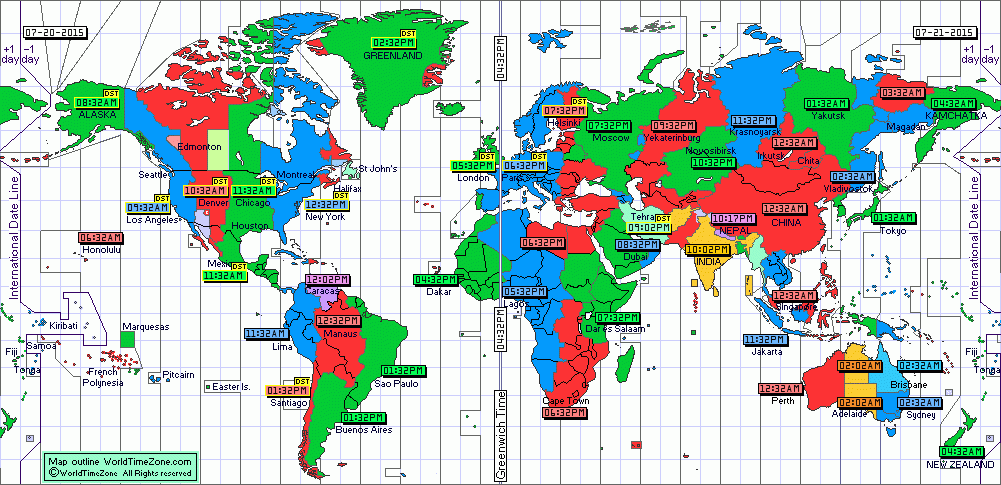
While there may be perks to doing a tour in Korea, there are definitely some down sides. One of those down sides is that with some of the more unique units, the higher headquarters is in the States. That is the case with my unit, above our brigade the hierarchy lands next near Washington D.C. While there is sometimes a benefit to being distant from your higher command (or from the “flag pole”), when it comes to meetings, it’s a bummer. Since the higher headquarters has the higher rank, they have the meetings when it is convenient for them which means, if you’re on the other side of the world (like 15 hours ahead), the time for the meeting falls in the middle of the night.

I just completed my first VTC (Video Tele-Conference) with our higher headquarters which began at 0930 for them but was 2230 for us. By the time it wrapped up and I walked back to my room, it was after 0100. And what else? There’s still work in the morning! I can skip the 0630 PT formation, but by 0900 I’ll be back at it.

At least it’s only a year…

World Time Zone Map

.
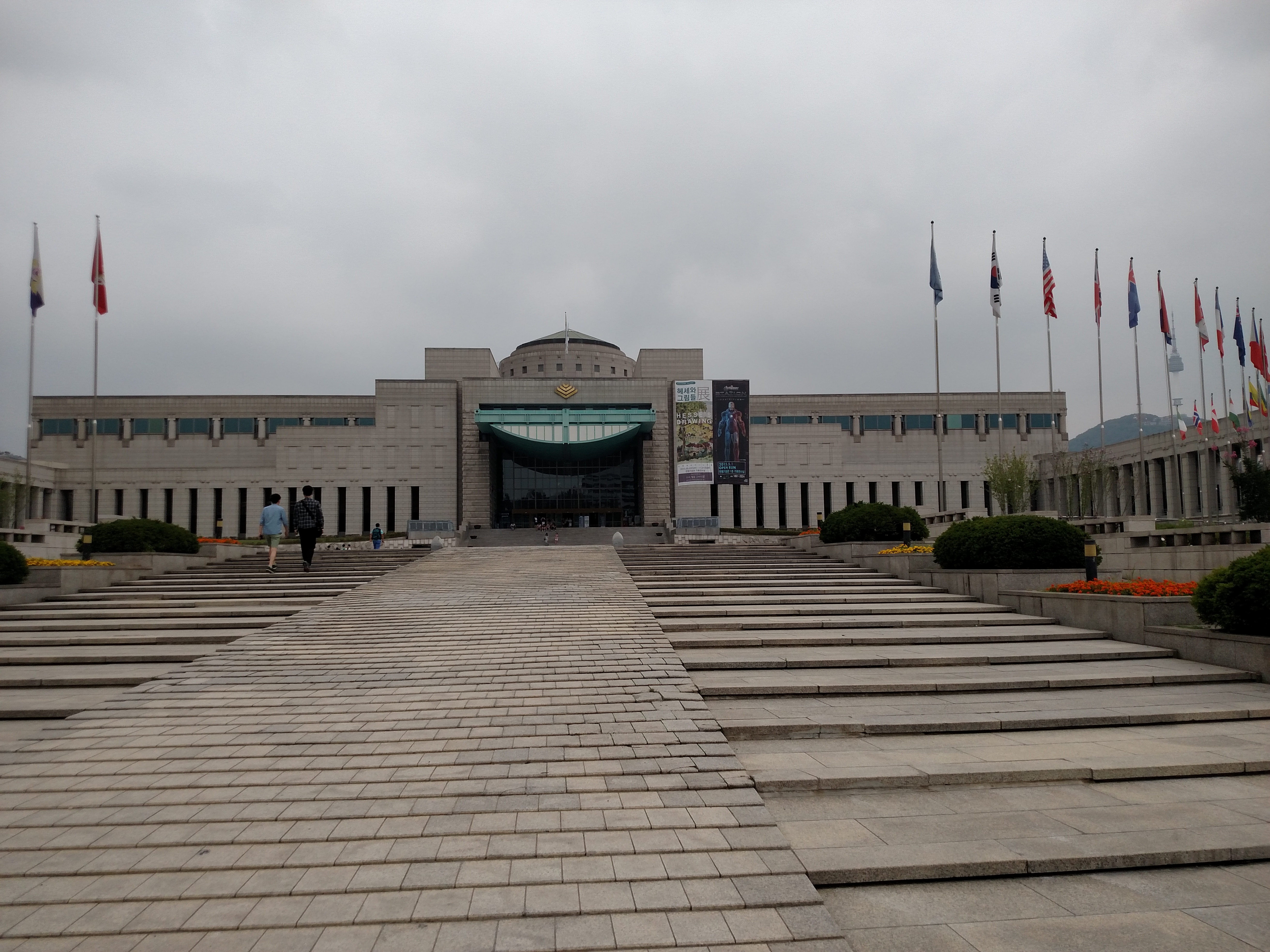
The War Memorial of Korea (Outside)

I thought that a good site to visit toward the beginning of my tour in Korea would be The War Memorial of Korea right off post in Yongsan-gu. It is more than just a memorial but a very well-done museum with most signs and descriptions in Korean, English, Japanese and Chinese. What really struck me about the memorial and museum is how they honored not just their own Service Members who served and died but also -to the extreme- those from other countries who came to Korea to help preserve their freedom from Communist rule.
The museum features exhibits and artifacts from the earliest Korean history all the way through their involvement in Operations Enduring Freedom and Iraqi Freedom. Here are a few pictures from my visit, but there was way too much to see to preserve on film (or digits)! To keep the post from being too long, I’ll divide it up into outside and inside pictures.

.

The Korean War Memorial/Museum

.

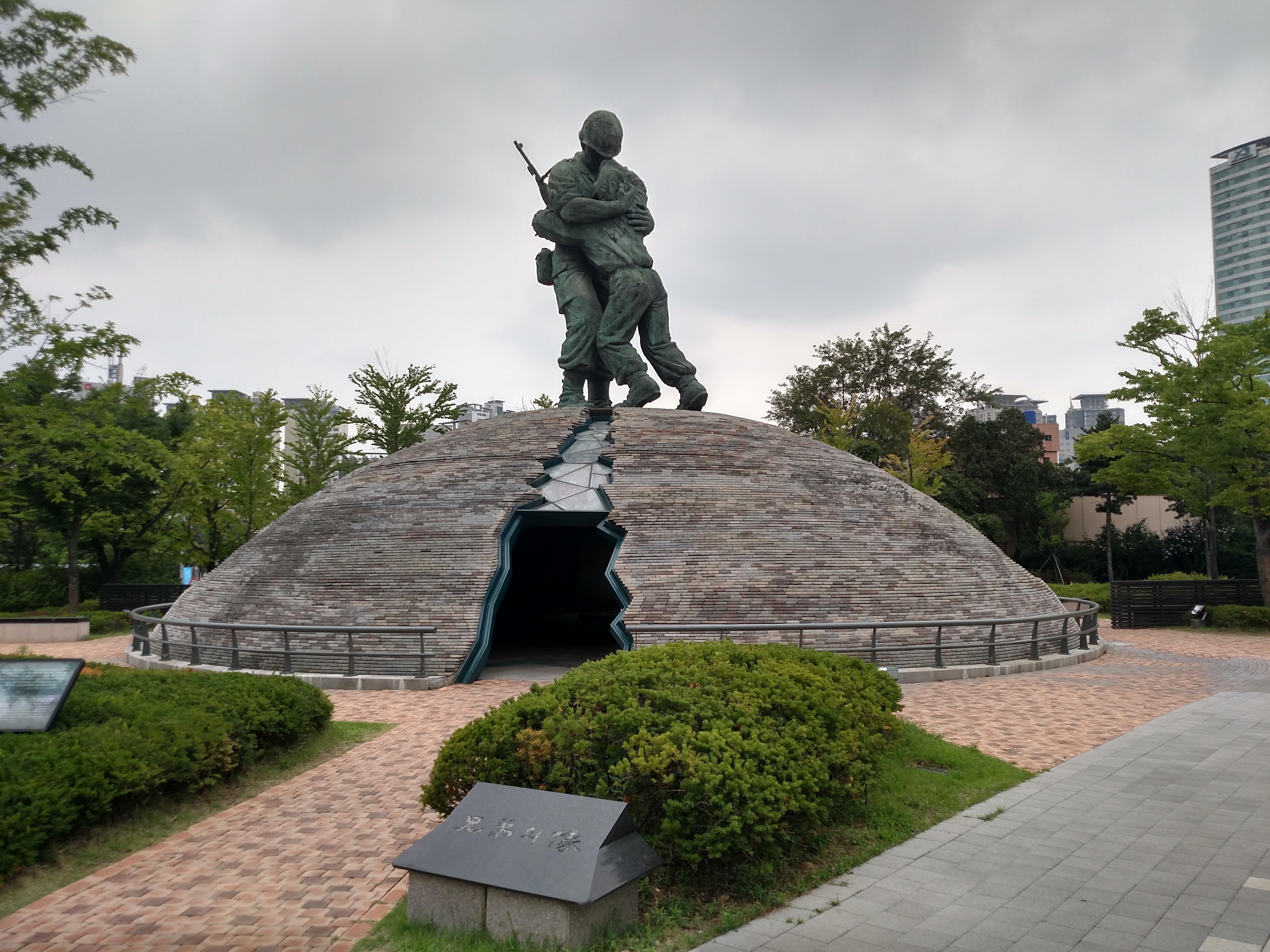
The Statue of Brothers
“The Statue of Brothers…is a symbol of the Korean War…The upper part of the statute depicts a dramatic moment when a South Korean officer and his younger brother, a North Korean Soldier, encounter and embrace each other at the battlefield. The statue expresses reconciliation, love, and forgiveness…The crack in the dome stands for the division of Korea and the hope for reunification.”
The Statue of Brothers
Another view of The Statue of Brothers
The Statue of Brothers
“Objects inside the dome [of The Statue of Brothers] include a mosaic wall painting that expresses the spirit of the Korean people to overcome the national tragedy and a map plate of the 16 UN Allied Nations that dispatched troops to the war. Links of iron chain on the ceiling signify the unbreakable bonds of a united Korea.”
The Statue of Brothers
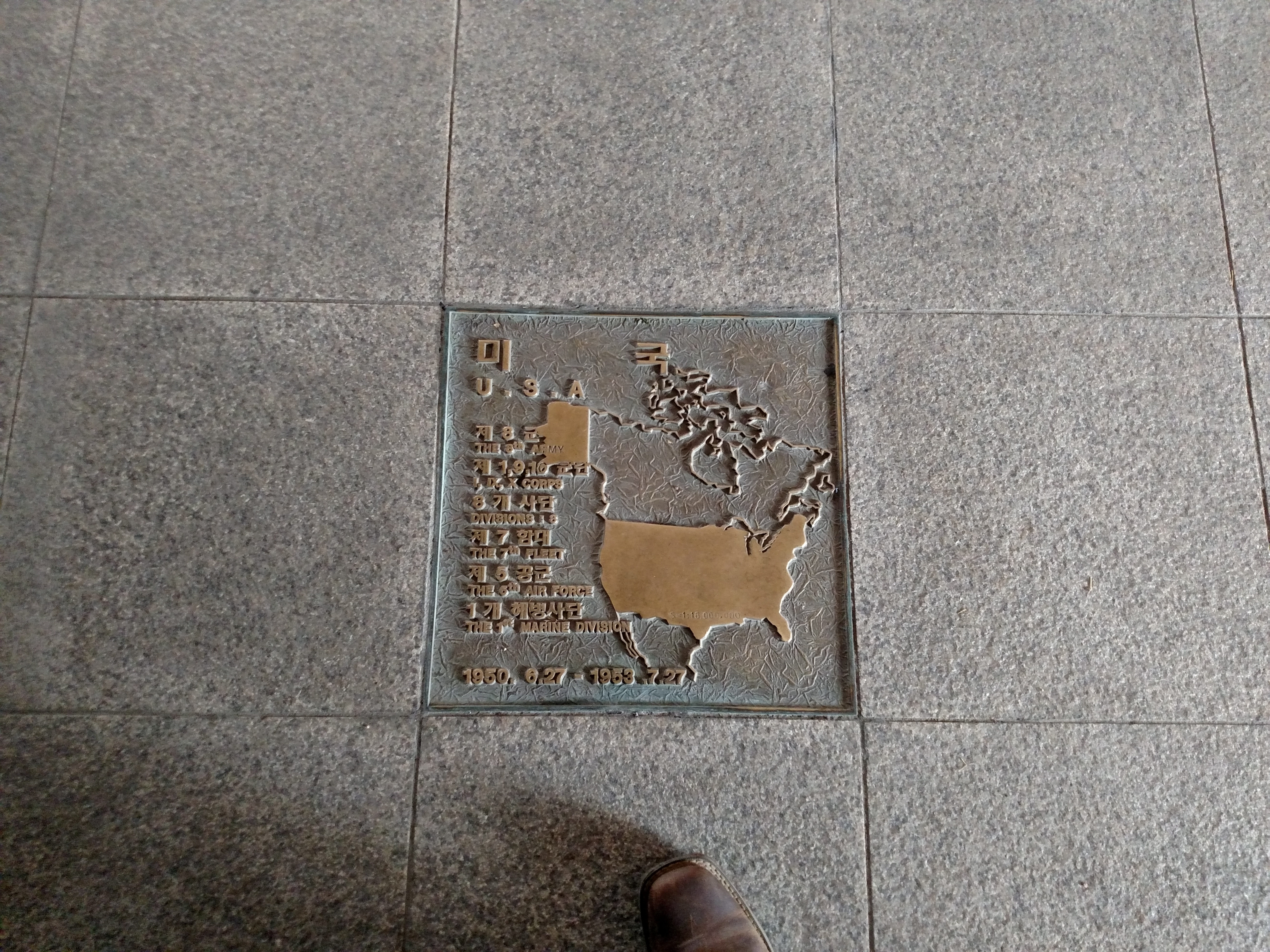
Inside the dome, the plaque on the floor showing the U.S. forces that participated in the Korean War.

.

Tower of Korean War
The Tower of Korean War. “Symbolizing the image of a bronze sword and a tree of life. The bronze sword represents the time-honored history and the warrior spirit. The tree of life symbolizes the prosperity and peace of the Korean people.”
Tower of Korean War
A closer view of the Tower of Korean War

.

Statues Defending the Fatherland
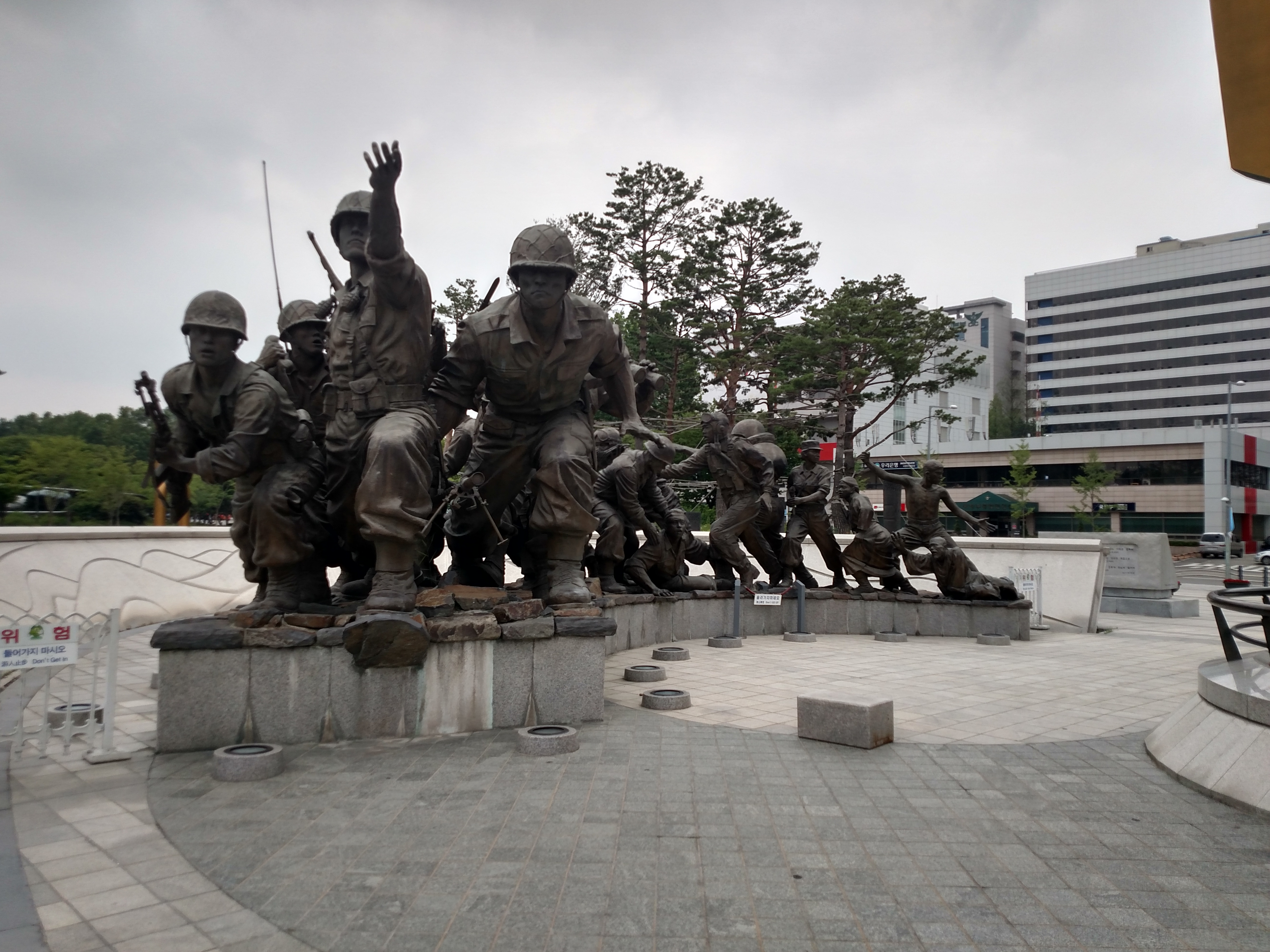
Statues Defending the Fatherland: “The statues represent 38 people from all walks of life who overcame the Korean War and depict the suffering and pain caused by the war while embodying the sublime spirit of sacrifice and dedication to the defense of the fatherland of past patriots.”
Statues Defending the Fatherland

.

The Monument of King Gwanggaeto the Great
“The Monument of King Gwanggaeto the Great (391~413) was built by his son King Jangsu (413~491) in 414 B.C. in commemoration of his father. ” (This is a life-size replica of the original monument currently located in China.)

.

Erecting the Clock Tower
“Erecting the Clock Tower: Symbolizing War and Peace, a Twin Clock Tower Points to a new time of New Millennium on a pile of rusty arms. Stopped clock wrecked by the Korean War. Here a Clock Tower is erected for the day of reunification, again beating like the hearts of two girls.”
The Clock of Hope for Peaceful Reunification
“The Clock of Hope for Peaceful Reunification: Someday when Unification is realized this Clock will be put on the Clock Tower and will indicate the time of Unification.”

.

Korean War Museum Aircraft
This picture shows a sampling of the many military aircraft used in Korea’s history on display outside of the museum…
Korean War Museum Equipment
…and the tanks and artillery…
Korean War Museum Equipment
…and lots of other military equipment!

.

Patrol Killer, Medium (PKM) 357
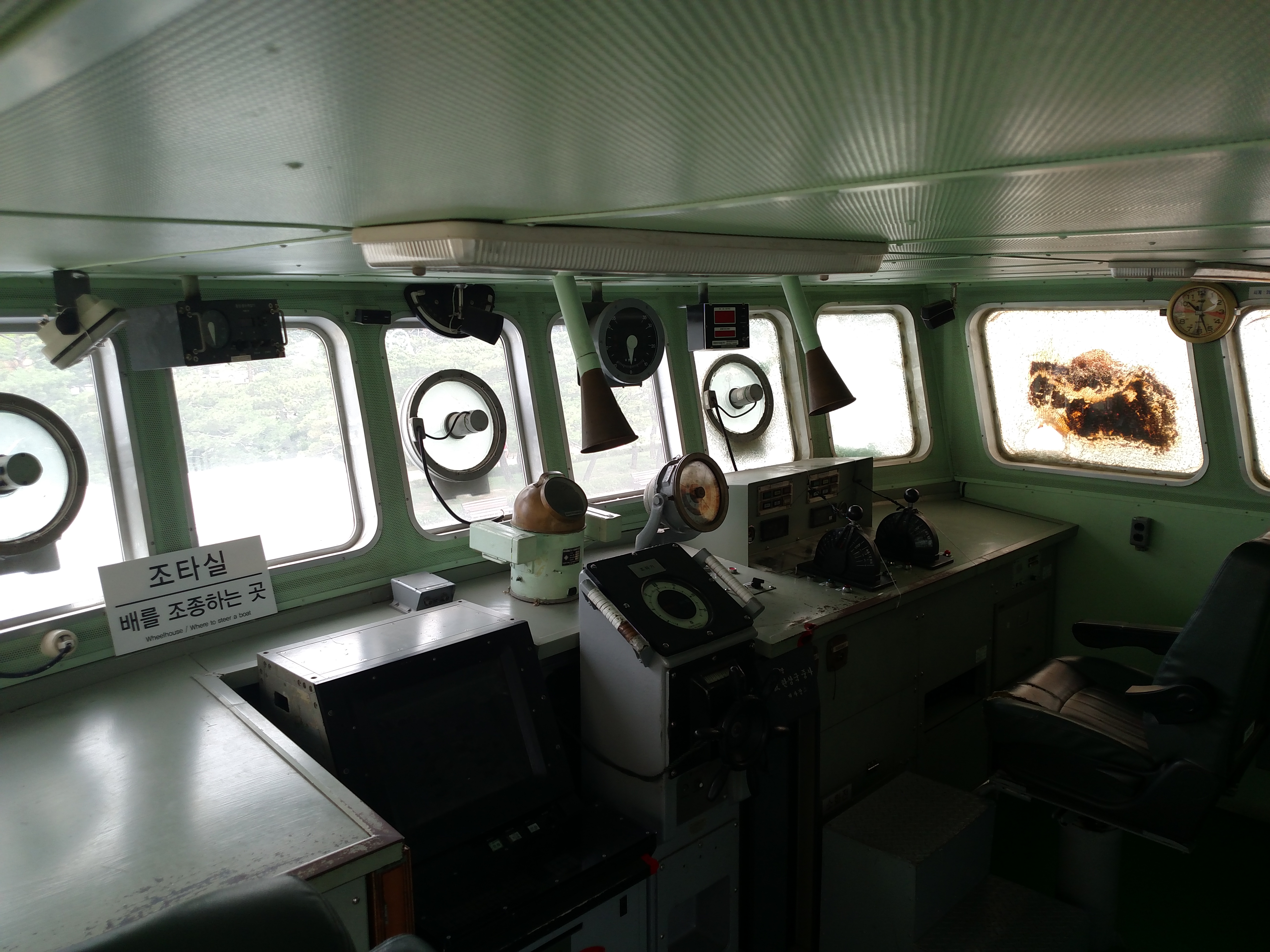
Referring to the boat on the left, “The PKM-357 National Security Exhibition Pavilion pays tribute to the six heroes of PKM-357 who have died with honor. The 2nd Sea battle of Yeonpyeong (29, June 2002) while fighting the enemy in order to safeguard the country’s waters and contribute to promoting the national security awareness of the people with the importance of defending the NLL.”
Patrol Killer, Medium (PKM) 357
This is a 1:1 scale reproduction of the PKM-357. The original “is exhibited at the park of the Second Fleet Command, ROK Navy.”

.